



Imagine sitting at a desk where the overhead fluorescent tube hums as loud as an electric lawnmower, the rough collar of your shirt feels like coarse sandpaper against your neck, and every scraping chair leg sends a jolt through your spine. For a child experiencing Sensory Processing Sensitivity, this is not an exaggeration—it is their everyday reality in an ordinary school classroom.
Too frequently, children struggling with sensory modulation are labeled as "inattentive," "fidgety," or "defiant." When we look closer through a neurodevelopmental lens, however, we see that these behaviors are involuntary survival adaptations to neurological overwhelm.
Understanding the Sensory Spectrum: Seekers vs. Avoiders
Sensory Processing differences generally manifest across two distinct profiles (and many children experience an overlap of both):
- Sensory Avoiders (Hypersensitive): The brain perceives sensory input as exaggerated or threatening. These children may cover their ears during assembly bells, recoil from finger paints or glue, become distressed in cafeteria lines, or withdraw socially during recess.
- Sensory Seekers (Hyposensitive): The brain registers sensory signals weakly, driving the child to actively crave intense stimulation. These children often crash into walls, rock on their chairs, tap pencils constantly, chew on clothing sleeves, or seek out high-impact wrestling games.
What Is a "Sensory Diet"?
Just as our physical bodies require balanced nutrition throughout the day, a child's nervous system needs a customized schedule of sensory inputs—known as a Sensory Diet. Proactively scheduled "heavy work" (like carrying books or doing wall push-ups) regulates the autonomic nervous system before meltdowns occur.
Why Classroom Environments Trigger Overload
Modern school classrooms are high-sensory environments designed for active engagement, but they present hidden stressors:
Common Sensory Triggers in Schools
- Auditory: Echoing hallways, sudden PA system announcements, scraping metal chairs, and simultaneous conversations during group work.
- Visual: Busy wall posters, flickering fluorescent lights, and visual clutter around the whiteboard.
- Tactile: Stiff school uniform fabrics, mandatory seating on hard plastic chairs, and accidental bumps in crowded lines.
- Vestibular & Proprioceptive: Being expected to sit motionless for 45 minutes at a stretch without positional adjustments.
Practical Accommodations for Educators & Parents
Small, low-cost modifications can make a transformative difference in a child's academic endurance:
- Provide Sensory Calming Corners: Dedicate a quiet, dimly lit nook in the classroom with beanbags and noise-dampening earmuffs where a child can decompress for 5 minutes when feeling overwhelmed.
- Incorporate Heavy Work Activities: Ask the child to deliver attendance folders, erase the chalkboard, or push stacks of books. Deep pressure stimulates proprioceptive joints, having an instant calming effect.
- Offer Flexible Seating Options: Wobble cushions, resistance bands around desk legs for kicking, or standing workstations allow sensory seekers to move without disrupting peers.
- Give Advance Warning for Transitions: Give verbal 2-minute warnings before sudden auditory transitions like bell rings, music classes, or fire drills.
How Clinical Psychology & Therapy Help at Sprouting Bloom
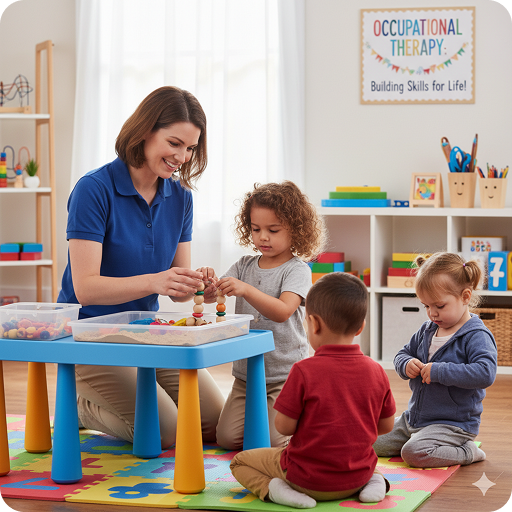
At Sprouting Bloom, our clinical psychology and occupational therapy departments work hand-in-hand. We perform comprehensive psychological and sensory profile assessments to map out each child's sensory triggers.
Through cognitive-behavioral emotional regulation techniques (such as the Zones of Regulation) and sensory integration therapy, we teach children self-awareness: recognizing when their engine is "running too fast" and choosing healthy coping strategies.