


When parents hear the term "occupational therapy," their first reaction is often confusion: "My child doesn't have an occupation—why would they need occupational therapy?"
In pediatric healthcare, a child's "occupations" are the essential activities that fill their daily life: playing with friends, learning in the classroom, writing with a pencil, buttoning a shirt, eating independently, and regulating their emotions. When physical, neurological, or sensory challenges hinder these milestones, pediatric occupational therapy (OT) provides the stepping stones they need to flourish.
What Does Pediatric Occupational Therapy Focus On?
At Sprouting Bloom, our occupational therapy program is rooted in child-centered, evidence-based practices designed around each child's unique developmental timeline. Our primary therapeutic areas include:
- Fine Motor Development: Strengthening the small muscles in the hands and fingers to enable effortless pencil grasps, scissor cutting, zipper handling, and shoelace tying.
- Gross Motor Coordination & Bilateral Integration: Teaching both sides of the body to work in harmony for jumping, catching a ball, and maintaining sitting posture at a school desk.
- Sensory Processing & Modulation: Guiding the nervous system to appropriately respond to sights, sounds, textures, gravity, and movement without feeling overwhelmed or under-stimulated.
- Self-Care & Daily Living Skills (ADLs): Fostering self-reliance in dressing, self-feeding, brushing teeth, and personal hygiene.
Sensory Integration Insight
Children who struggle with sensory regulation are not being "difficult" or "disobedient." Their brain is simply experiencing the environment at an amplified or muted intensity. Specialized sensory gyms and therapeutic swings help reorganize neural pathways so the child feels grounded and secure.
Common Signs Your Child May Benefit from an OT Evaluation
Early identification is one of the greatest gifts parents can give their children. While every child reaches developmental stages at their own rhythm, you should consult an occupational therapist if you observe:
Key Developmental Indicators
- Difficulty maintaining attention or sitting upright without slouching on furniture
- Frequent clumsiness, tripping, or avoiding playground climbing equipment
- Strong distress over clothing tags, shoe textures, or messy sensory play (e.g., finger paints, sand)
- Poor pencil grasp, illegible handwriting, or hand fatigue during schoolwork
- Struggles with self-dressing, buttons, zippers, or using utensils during mealtimes
- Intense reactions to sudden loud sounds, bright lights, or crowded environments
What Happens in an OT Session at Sprouting Bloom?
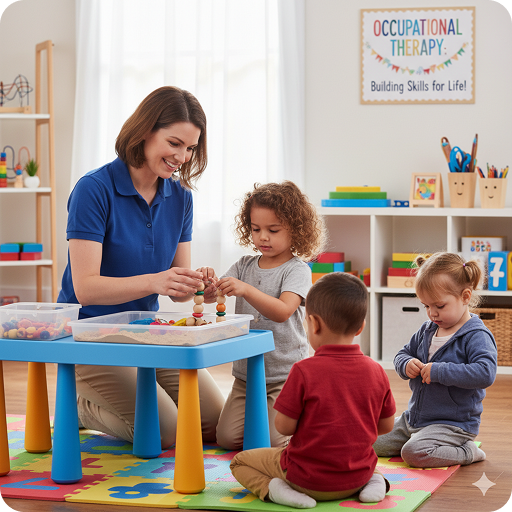
For a child, therapy should never feel like a chore. At our centers in Howrah and Dum Dum, therapy takes place in playful, positive, sensory-rich rooms. Activities look like engaging play—swinging on bolster swings, navigating obstacle courses, sorting colored beads, or drawing in sensory trays—but each activity is scientifically calibrated to train specific neural and motor functions.
Furthermore, we partner closely with parents. You will receive customized home exercise programs and practical environmental adaptations to reinforce positive habits at home and in school.
How to Get Started
If you have questions about your child's coordination, handwriting, or sensory responses, our multidisciplinary clinical team is here to support you. An initial consultation provides a comprehensive assessment and a clear roadmap for your child's growth.